
Self StorageLeon Della BoscaThu 16 Jul 26
StoreLocal Boss Sees Long Runway for Storage Sector Growth

“It’s low risk, it’s mispriced and there’s not a lot of competitors. This is an area where I think I can grow into.”
That was Hans Pearson’s read nearly two decades ago, after buying a block of land in 2006 and, as a landlord, seeing how the self-storage business that was leasing the site worked.
“I bid for and unexpectedly got ablock of land at Melbourne Airport back in 2006 and didn’t know what to do with it,” he told The Urban Developer.

So he leased it to National Storage.
“They had 600 tenants and just 10 car parks on that block, a high density of built form and there was next to no moving parts, just the one lift at the time,” he said.
“And I thought that’s a pretty smart business with a really high diversified income stream.”
Pricing at the time struck him as out of step with the risk profile: local cap rates were well into the double digits for what he considered a genuinely low-risk income stream, whereas US research showed self-storage cap rates there were tighter than industrial.
Few operators were chasing the opportunity locally, so he sold the airport site and reinvested the proceeds into an operating self-storage business.
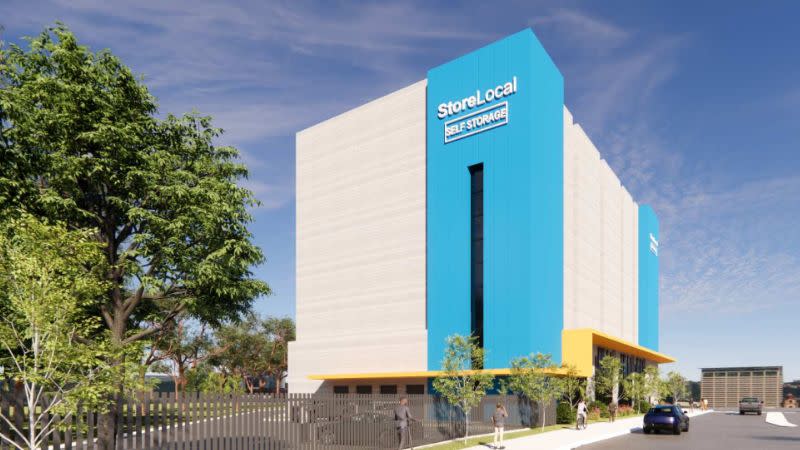
Two decades on, Pearson leads StoreLocal, one of Australia’s largest self-storage operators now backed by global private equity group BlackRock, which became majority owner just over a year ago.
“What we’re working on right now is rapid growth, institutionalising the business and all the bits and pieces that come with having a $14-trillion global giant as a majority owner,” he said.
“Self-storage has gone from, in the 80s, family-owned, industrial-style premises, through to the 90s where they started to become somewhat corporatised with larger brands evolving, and that escalated through the 2000s,” Pearson said.
“With National Storage listing in 2013, the sector started to see a runway to becoming institutionalised, which it already had done many years previously in the US, where it’s been the best performing REIT asset class alongside manufactured home parks for 30 years.”
Built form has followed that capital, with higher-density facilities such as StoreLocal’s eight-level Perth CBD project replacing single-storey sheds, alongside mixed-use formats including industrial units of up to 120sq m at several sites.
Innovation, Pearson said, has lagged in the self-storage game “because the operating margins have always been so high that there’s been no real incentive to innovate”.
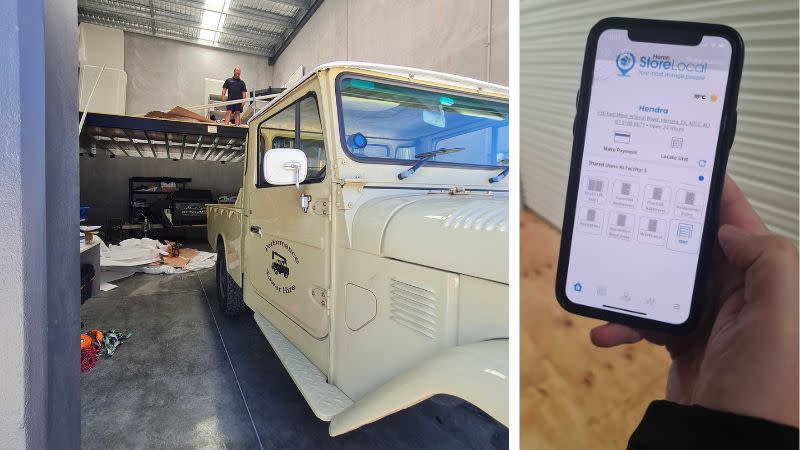
“We run an unmanned model across our 40 plus stores now and it’s all data and digital focused,” he said, although he is quick to add that automation has not changed the fundamentals of service.
“Customer delivery and customer care has never changed.”
Pearson said per capita self-storage penetration in Australia, roughly a third of that in the US, was evidence of a long growth runway for the sector.
“So long as the population growth continues, so long as there is economic growth, and so long as housing remains a priority in this country, then they are all very positive for the self-storage story,” he said.
Despite the growth StoreLocal has already achieved, Pearson said the business retains the founder’s sense of humility.
“We’ve got a long way to go,” he said. “We don’t feel we’re anywhere near the finish line in our business.”
Hans Pearson will join a panel discussion at Urbanity-26 examining outperforming sectors across the property landscape.